In this article
You open a blank doc. Type “YouTube video ideas.” Stare at 47 generic suggestions that have nothing to do with your business.
An hour later, you’re still staring. The problem isn’t a lack of ideas — it’s that random video ideas don’t map to a goal. This guide fixes that. You’ll walk away knowing exactly what to post on YouTube based on what you’re actually trying to accomplish with your channel.
Why Does Starting With “What Should I Post?” Lead Solo Creators Nowhere?
Most YouTube content advice is built for entertainers — people whose only goal is views and watch time. If you’re a coach, a freelancer, a SaaS founder, or a digital product seller, that advice works against you.
You’re not building a media company. You’re building an audience that eventually becomes your business. A video that gets 50,000 views but attracts the wrong people is worse than one that gets 500 views from people who need exactly what you sell.
Views are a vanity metric. Subscribers who click your lead magnet, book a call, or buy a product — that’s the needle you’re trying to move. The frame shift: don’t start with “what’s interesting to post.” Start with “what does this video need to do for my business?”
Once you answer that question, the content calendar stops being a blank page. It becomes a decision tree.
Step 1: What Is the Right Goal for Your YouTube Channel Right Now?
Every successful YouTube channel has one primary goal at any given stage. Not five goals. One.
The four core YouTube content goals are reach, subscribers, leads, and sales. Each requires a different content strategy. Reach content targets broad, searchable topics. Subscriber content rewards existing viewers with depth and series. Lead content bridges the video to a free resource. Sales content addresses buyer-stage objections directly.
Choose your current goal from this table:
| Goal | What You’re Optimizing For | When to Choose It |
|---|---|---|
| Reach | Views, impressions, new eyeballs | Early stage, awareness phase |
| Subscribers | Channel growth, returning audience | 0–1K subscriber phase |
| Leads | Email signups, freebie downloads | 500+ subs, lead magnet live |
| Sales | Product or service conversions | Established audience, offer ready |
Most solo creators try to achieve all four at once. That produces content that does none of them well. Pick the stage you’re in and commit to it for at least 60 days.
If you’re just starting out, focus on reach first, then subscribers. Once you have a lead magnet live, shift to leads. Once you have buyers in your audience, layer in sales content. You’re not locked in forever — but you need to know where you are today.
Step 2: Which Content Types Match Your Business Goal?
Once your goal is clear, the content types that serve it become obvious. This is the mapping most YouTube advice skips entirely.
Reach content (new audience)
These are broad, searchable, evergreen videos: “how to grow a freelance business,” “what is passive income,” “best tools for coaches.” They attract people who have never heard of you. Per YouTube Creator Academy, videos optimized for search discovery consistently outperform trend-chasing for long-term channel growth.
Target one specific question your audience is already searching. Use YouTube’s autocomplete to find real queries — type your niche term and note every suggestion that appears.
Subscriber content (returning audience)
Series, behind-the-scenes, and opinion videos. “Why I turned down a $10k project,” “my content system for building in public,” “what I’d do differently if I started over.” These reward people already watching. They don’t attract strangers, but they convert viewers into subscribers who keep coming back.
Lead content (email list growth)
Tutorial and value-led videos where the natural next step is a download or signup. “Here’s my exact system — grab the free template in the description.” The video delivers real value. The lead magnet is the logical extension. Every tutorial in this category needs a CTA to a specific free resource.
Sales content (product or offer conversions)
Case studies, comparisons, and transformation stories. These work for people who are already warm — they’ve seen several of your videos and are weighing a decision. “How I went from [problem] to [result]” and “tool X vs tool Y for [specific use case]” are high-converting formats here.

Step 3: How Do You Choose 3 Content Pillars for Your Channel?
A content pillar is a category of topics your channel covers consistently. Three pillars is the right number for solo creators — enough variety to stay interesting, narrow enough to build authority.
A solo creator’s three content pillars should map to the three stages of audience relationship: awareness (attract new viewers), authority (build trust with existing viewers), and conversion (move warm viewers toward an offer). One pillar per stage keeps the channel focused without becoming repetitive.
The formula: one pillar per audience stage.
Pillar 1 — Awareness: Broad, searchable topics that bring new viewers in. For a business coach: “how to get freelance clients,” “starting a coaching business,” “what is a discovery call.” These videos find people who have never heard of you.
Pillar 2 — Authority: Deeper content that builds trust with people already watching. Behind-the-scenes content, methodology breakdowns, opinion pieces, and case studies. These don’t need high search volume — they convert viewers into believers.
Pillar 3 — Conversion: Content that moves viewers toward your offer. Tool reviews, comparisons, tutorials with built-in CTAs, transformation content. These videos should always end with a clear next step.
Before you film anything, ask: which pillar is this video? If it doesn’t fit clearly, it’s probably not the right video for this stage of your channel.
Step 4: What Is the 3-Bucket System for YouTube Content Planning?
This is the practical tool that replaces staring at a blank page. Every time you sit down to plan content, fill these three buckets.
Bucket 1 — Search-driven
What questions is your audience already typing into YouTube? Use YouTube’s autocomplete — type your niche term and capture every suggestion. Then cross-reference with Google’s “People Also Ask” for the same keyword. Those questions are often underserved on YouTube. Pick 2–3 per month. These videos will rank and drive organic traffic over time.
Bucket 2 — Topical or timely
What’s happening in your industry right now? Platform updates, trending tools, common debates in your niche. One per month. These don’t rank forever, but they ride current search spikes and signal relevance during the first 30 days after posting.
Bucket 3 — Authority-building
Your own experience, your own opinion, your own system. “My exact process for X,” “why I changed my approach to Y,” “what I did when Z happened.” These don’t need high search volume. They build the trust that turns viewers into subscribers, and subscribers into buyers.
A practical monthly rhythm: 2 search-driven + 1 topical + 1 authority. That’s 4 videos — manageable for a solo operator without burning out.
Stop guessing what to post on YouTube. The free ContentEngine Starter Pack includes 20 YouTube-specific content ideas filtered by your goal — views, subscribers, or leads. Built for solo creators without a content team. Free. Instant download.
Step 5: How Do You Build a 30-Day YouTube Posting Rhythm That Sticks?
Consistency beats quantity on YouTube. A channel that posts 2 videos a month every month for 12 months will outperform a channel that posts 10 in January and disappears.
The practical setup for a solo creator:
Week 1: Film and edit the search-driven video. Week 2: Film and edit the authority-building video. Week 3: Film and edit the topical video. Week 4: Buffer week — repurpose clips into YouTube Shorts, plan next month’s 3 buckets, or take a rest.
This is content batching — and it’s the only sustainable workflow at solo scale. Trying to film and edit the same week you post is how you burn out by Month 3. For a deeper breakdown, see the content batching guide.
One more rule: never post a video without your next title planned. The blank-page problem hits hardest right after you publish. Before you hit “publish,” write down the rough title of your next video. Even a vague title keeps the momentum going.

Step 6: How Do You Track Which YouTube Videos Are Actually Working?
Most solo creators open YouTube Studio, look at view counts, and feel either good or bad. That’s not a tracking system. That’s a mood tracker.
What you need to track depends on your goal:
For reach videos: Views, impressions, and average view duration past the 30-second mark. If people are dropping off before 30 seconds, the hook isn’t working — the topic may be right but the opening isn’t. If impressions are high but click-through rate is low, the thumbnail or title needs work.
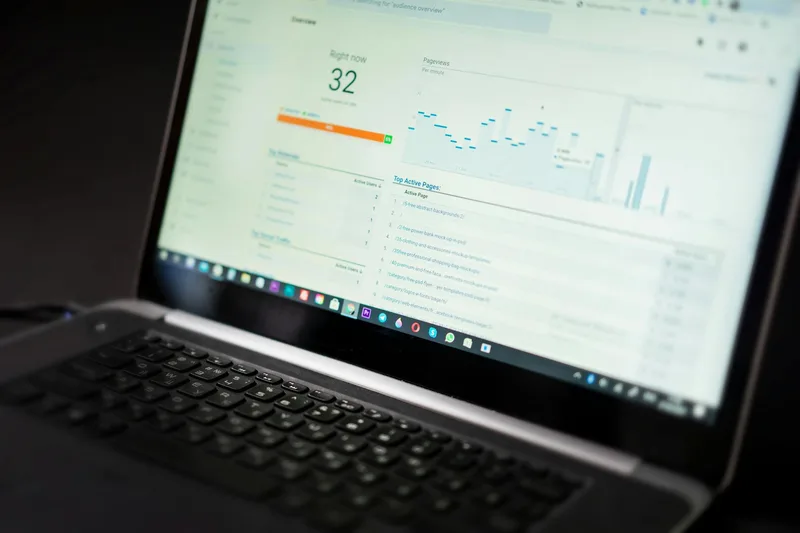
For lead videos: Link clicks from the description. If you’re using UTM parameters on your lead magnet URL, you can trace email signups back to specific videos in Google Analytics. A lead video with no measurable signups isn’t performing — the CTA may be weak, or the wrong audience is finding the video.
For sales videos: Conversion data from your landing page or checkout flow. Tag your YouTube traffic with source parameters and check which videos appear in your buyer journey. Tools like Google Analytics show traffic source breakdowns when you set up UTM tracking.
The minimum setup: before you post each video, write down the goal and the one metric you’ll check at 30 days. A spreadsheet with three columns — video title, stated goal, 30-day metric — is enough to spot patterns. You don’t need a sophisticated analytics stack to start.
Step 7: How Do You Use Past Video Performance to Plan Future YouTube Content?
This is the step most solo creators skip — and it’s where the channel actually grows.
Once you have 10–15 videos posted, patterns emerge. Some topics consistently outperform others. Some formats keep people watching longer. Some CTAs drive real email signups while others get ignored.
The playbook: pick the top 3 performers from your last 10 videos. For each one, ask:
- What format did it use? (Tutorial, opinion, list, case study?)
- What specific problem did it address?
- Which of your three pillars did it fall under?
Then make 3 more videos in that exact pattern. Not the same video — the same structure applied to a related problem. This is how channels find their lane. The algorithm doesn’t reward novelty for its own sake. It rewards patterns it can recognize and recommend consistently.
For a repeatable system to do this analysis across months, the content creation workflow for solo creators walks through the full cycle from ideation to review.
What Are the Common Mistakes When Deciding What to Post on YouTube?
Posting what’s interesting to you, not what’s useful to your audience. There’s a real difference. When you’re building an audience from scratch, the audience’s problem takes priority over your curiosity. Build trust first. Earn the right to experiment later. The formula inverts as the channel grows — a channel with 100k subscribers can post almost anything. A channel with 200 subscribers needs to stay useful.
Treating YouTube as separate from your business. Every video should connect to something — your lead magnet, your offer, your email list. A channel that doesn’t connect to your business funnel is a hobby, not a growth engine. Even one CTA per video changes the downstream math completely. For help identifying which CTA fits each content type, the content idea generator maps ideas to outcomes.
Copying big channels with different audiences. Large-budget production formats work because of scale, team, and a mass audience. Copying those formats as a solo creator with 200 subscribers produces expensive, time-consuming videos that reach nobody relevant. Study creators at your stage with your audience — not people operating 100x larger with a full production team.
Not tracking anything, then wondering why nothing improves. If you don’t know which videos drove subscribers, email signups, or sales, you cannot improve. Pattern recognition requires data. Even a basic spreadsheet with video title, stated goal, and 30-day metric is enough to change how you decide what to make next.

Frequently Asked Questions
What should I post on YouTube to grow my channel?
The most effective content for channel growth matches a specific goal: broad, searchable videos (reach content) for new viewers, series and opinion pieces (subscriber content) for retention, and tutorials with CTAs (lead content) for email list growth. Most growing solo-creator channels post a mix — typically 2 search-driven and 1–2 authority-building videos per month, based on YouTube Creator Academy guidance on search-optimized content strategy.
How often should I post on YouTube as a solo creator?
Consistency matters more than frequency. Channels that post on a predictable schedule — even twice a month — typically outperform channels that post in bursts and then disappear, per YouTube Creator Academy guidance. For most solo creators managing production alone, 2–4 videos per month is the sustainable range. Starting at 2 per month and increasing only after the workflow feels manageable is the safer path than overcommitting early and burning out.
Should I post long-form videos or YouTube Shorts?
Long-form content (8+ minutes) builds watch time, subscriber loyalty, and search ranking. Shorts drive reach and impressions but produce lower subscriber conversion rates per view. For solo creators building a business-focused audience, prioritize long-form first and use Shorts as a distribution layer — repurpose clips from main videos rather than producing Shorts content from scratch. This approach maximizes output from the same production effort.
What types of YouTube videos get the most subscribers?
Tutorial and how-to videos that solve a specific problem consistently drive subscriber growth, because viewers who found one useful solution will return for more. According to YouTube Creator Academy, videos that target a specific pain point, deliver clear value in the first 60 seconds, and include an explicit subscribe CTA at the end perform best for subscriber acquisition. For specific formats organized by goal, see YouTube video ideas organized by goal.
How do I know if my YouTube content strategy is working?
Define success before you post. For each video, record the stated goal — reach, subscribers, leads, or sales — and the one metric you’ll check at 30 days. Views measure reach. Subscriber gain measures retention appeal. UTM-tracked link clicks measure lead generation performance. A strategy is working when your chosen metric improves consistently over a 90-day window, not when any single video performs well. Single-video performance is noise; 90-day trends are signal.
Keep Reading
What to Do Next
Choose the path that fits where you are right now.
Get the Starter Pack
80 platform-specific content ideas filtered by your goal. Free PDF, instant download.
Get the Starter Pack →Browse by Platform
Read the platform-specific content strategy for your channel.
Know What to Post This Week
One email. Your next post idea, matched to your goal.
Free. No spam. Unsubscribe anytime.
Related Articles
30 YouTube Video Ideas for Solo Creators (Filtered by Goal)
30 YouTube video ideas for solo creators, organized by what you're actually trying to achieve. Every idea maps to a result: views, subscribers, leads, or sales.
50 YouTube Content Ideas: Filtered by Goal
50 YouTube content ideas organized by goal — views, subscribers, leads, or sales. Stop posting at random. Every idea here maps to a specific result.
120 YouTube Video Ideas: By Niche, Goal, and Format
120 YouTube video ideas for solo creators, organized by niche and business goal — not a generic list. Find what to film next in under 5 minutes.